Argentina Reciprocity Fee Refund Window Favors E-Visa Over Airport Counter Claims
Argentina charges US citizens a reciprocity fee of roughly US$160 per person for entry. Most travel coverage tells you to pay at the airport counter upon arrival. That advice is half-right at best. The counter is a trap: cash-only queues, damaged-bill rejections, handwritten receipts that vanish before you exit. The e-visa portal, buried in Migraciones navigation, offers a quieter route with digital receipts and clearer refund instructions. But neither option is straightforward, and the refund window — 60 days from exit, not payment — catches nearly everyone off guard. This article walks through the fee's mechanics, the counter's hidden costs, and the paperwork mistakes that get travelers turned around. The goal is not to sell you on one method but to show where conventional coverage falls short.
The $160 Fee That Travel Guides Get Wrong
The Argentina reciprocity fee is a visa-like charge imposed on US citizens and a few other nationalities. As of late 2024, the fee stands at US$160 per person, valid for 10 years from date of payment. Most travel guides — from Lonely Planet to blog posts — advise paying at the Ezeiza airport counter upon arrival. That advice sounds simple, but it skips several nuances. The fee is not a visa; it is a reciprocity measure tied to the US charging Argentines a similar amount. The 10-year validity means you can reuse the same payment for multiple trips, but only if you keep the receipt. The official Migraciones website lists the fee under "reciprocity rights," a phrase that confuses many travelers into thinking it is optional. It is not. Immigration officers demand proof of payment before stamping your passport.
Conventional travel coverage often skips the refund nuance entirely. The fee is refundable if you paid at the airport counter and exit Argentina within 60 days. But the refund window opens only after you leave, and the process requires a physical receipt with an official stamp. Most articles mention the refund in a footnote, if at all. The e-visa option — paying online before travel — is typically buried in the official site navigation under "electronic payment of reciprocity fee." Travel writers tend to default to the counter because it is the older, more visible method. But the counter's convenience is an illusion. The queue alone can eat an hour, and the cash-only policy forces travelers to carry pristine US dollars. Damaged bills — a corner torn, a small stain — get rejected, sending you to a currency exchange booth that charges a premium. The e-visa portal, by contrast, takes credit cards and emails a PDF receipt that doubles as a digital record.
The fee's structure also trips up overland travelers. If you enter Argentina by bus from Chile at Paso Cristo Redentor, there is no counter. You must have paid online or risk being turned back at the border. Many travel articles assume air travel, ignoring the thousands who cross the Andes by road. The refund window applies equally to all entry points, but the counter method is only available at major airports. For overland entries, the e-visa is the only option. This gap in coverage leaves bus travelers scrambling at the border, sometimes paying a second time because their online payment did not go through or they lacked a printout. The fee is the same, but the stakes are higher when you are standing at a remote checkpoint with limited connectivity.
Travel guides also fail to mention that the fee is per person, not per passport. Families traveling together pay for each member, including children. Some parents assume a single payment covers the whole family, leading to delays at immigration. The online portal allows separate payments for each traveler, but the receipt must show each name. The counter issues one receipt per payment, so a family paying together gets a single receipt. If one member exits later, the refund becomes complicated. These are the sorts of details that travel coverage glosses over in favor of a generic "pay the fee" instruction. The result is a system where the easiest path — the counter — is often the most expensive in time and hassle, while the e-visa, though less advertised, offers better tracking and refund clarity.
Why the Airport Counter Is a Trap
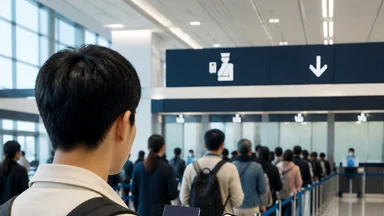
The Ezeiza arrivals hall has a dedicated counter for reciprocity fee payment. It looks official, with a Migraciones sign and a queue that snakes between ropes. Non-residents typically wait 30 to 60 minutes, depending on flight arrivals. The counter only accepts US dollars in crisp, pristine condition. A single fold, a tiny tear, or a pen mark can get your bill rejected. If that happens, you must find a currency exchange booth in the arrivals area, which usually charges a poor rate and takes a commission. Some travelers have reported exchanging $100 bills and losing $15–20 in the process. The counter staff do not make change; they hand you a handwritten receipt with the amount paid and a stamp. The receipt is your only proof of payment. Lose it, and you may have to pay again on a future trip.
The handwritten receipts are easy to lose before departure. They are roughly the size of a business card, printed on thin paper, and often tucked into a passport or wallet. After a two-week trip, many travelers forget about the receipt until they are at the airport leaving. If you plan to claim a refund, you need that receipt with the original stamp. The refund application requires a scan of the receipt, and the stamp must be legible. Counter receipts sometimes lack a date stamp, which voids the refund claim. The e-visa confirmation email, by contrast, is a digital PDF with a clear date and payment ID. You can store it in your email or cloud drive, making it harder to lose.
The refund window for counter payments is 60 days from the date of exit, not from the date of payment. Many travelers assume the clock starts when they pay, so they submit a refund application early and get rejected. The Migraciones website states this clearly, but the counter staff do not remind you. If you pay at the counter and exit 45 days later, you have 15 days to file. If you exit 61 days later, you forfeit the refund entirely. The e-visa payments are non-refundable, but the portal includes a link to refund instructions for counter payments. The counter method gives no such guidance. You are left to find the Migraciones refund page on your own, which requires navigating a Spanish-language site with limited English support.
The counter also creates a bottleneck for connecting flights. If you arrive in Buenos Aires with a tight connection to Ushuaia or Mendoza, the queue can make you miss the domestic flight. Some travelers have reported missing connections because the reciprocity fee line moved slowly. The e-visa, paid before travel, eliminates this risk. You simply show the confirmation email or printed PDF at immigration and proceed. The counter method forces you to choose between paying the fee and making your flight. Travel insurance rarely covers this scenario because it is considered a procedural delay, not a covered event. The Points Guy's guides on travel credit cards often highlight lounge access and dining benefits but skip this logistical trap entirely. A lounge pass is useless if you are stuck in a queue on the arrivals level.
E-Visa Portal: The Quietly Better Route
The Migraciones e-visa portal, officially called "Pago Electrónico de Tasa de Reciprocidad," is accessible from the main website. The navigation is not intuitive: you click "Trámites" then "Tasa de Reciprocidad" then "Pago Electrónico." The page loads in Spanish, with an English option hidden in a dropdown. Once you reach the payment form, you enter passport details, travel dates, and credit card information. The fee is the same US$160, but you avoid the cash requirement. The portal accepts Visa, Mastercard, and American Express. The transaction processes immediately, and a confirmation email arrives within minutes. The email contains a PDF attachment with your name, passport number, payment date, and a QR code. This PDF is your proof of payment.
The e-visa route offers a digital receipt that is harder to lose than a paper slip. You can store the PDF on your phone, print a copy, or keep it in your email. Immigration officers at Ezeiza scan the QR code to verify payment. The process takes under a minute. For overland entries, the PDF is equally valid, though you should print a copy in case the border post has no scanner. The portal also includes a link to refund instructions for counter payments, though e-visa payments themselves are non-refundable. This seems like a downside, but the refund window for counter payments is narrow and often missed. The e-visa's non-refundable nature simplifies the decision: you pay once and forget it. The 10-year validity means you can reuse the same payment for future trips, as long as you keep the PDF.
The e-visa portal is not without flaws. The site occasionally times out during payment, and some credit cards trigger fraud alerts because the transaction originates from Argentina. A few travelers have reported that the confirmation email landed in spam folders. The portal also requires a stable internet connection, which can be a problem if you are applying from a remote area. But these issues are manageable: use a reliable browser, whitelist the Migraciones domain, and check spam after payment. The counter method has its own failure points — damaged bills, lost receipts, long queues — that are harder to mitigate. On balance, the e-visa portal is the quieter, better route for most travelers.
When the Airport Counter Makes Sense: A Counter-Argument
Despite the drawbacks, the airport counter is not without its advantages. For travelers who book last-minute flights, the e-visa portal may not be an option if departure is within hours and internet access is unreliable. The counter allows same-day payment upon arrival, no advance planning required. Similarly, travelers who lack a credit card — or whose cards are rejected by the portal due to fraud alerts — can fall back on cash. The counter also avoids the risk of online payment failures: if the portal times out or the transaction is declined, you still have the counter as a backup. For those who prefer not to share passport details online, the counter offers a paper-based alternative, albeit with its own privacy risks.
Another scenario where the counter may be preferable is for travelers who intend to stay in Argentina for more than 60 days. Since the refund window only applies to stays under 60 days, a longer trip makes the refund irrelevant. In that case, the counter's cash payment and handwritten receipt are functionally equivalent to the e-visa's PDF, except the counter avoids potential online issues. Some travelers also report that the counter staff can answer questions about the fee and entry requirements in person, whereas the Migraciones website offers limited customer support. For those who value human interaction over digital self-service, the counter provides a direct channel.
Frequent travelers to Argentina might also prefer the counter if they have a history of losing digital files or changing email addresses. A physical receipt tucked into a passport is harder to accidentally delete than an email. However, the counter receipt is small and easy to misplace, so this advantage is marginal. Ultimately, the counter method is a viable option for travelers who are prepared for its quirks: bring pristine US dollars, allow extra time for the queue, and store the receipt carefully. The choice between counter and e-visa depends on individual circumstances, not on one method being universally superior.
The Refund Window: A Focused Explanation
The reciprocity fee refund is available only to those who paid at the airport counter. E-visa payments are non-refundable by design. The refund window opens after you exit Argentina and closes 60 days later. If you exit on day 45 after payment, you have 15 days to apply. If you exit on day 61, you get nothing. The Migraciones website says the refund is for "those who did not use the service" — meaning, you paid but did not enter, or you entered and left within 60 days. The logic is that the fee covers a 10-year entry right, so a short trip does not fully consume it. The refund is partial: you get back the full US$160, minus any bank transfer fees. The process takes 30 to 90 days, and the money arrives in your bank account in US dollars or the equivalent in Argentine pesos, depending on the option you choose.
The application requires a scanned copy of the counter receipt (with stamp), a scanned copy of your passport bio page, and a completed form from the Migraciones website. The form asks for your exit date and the reason for the refund. The most common reason is "short stay." If you lost the receipt, you can request a duplicate from the counter, but you must do so before leaving Argentina. The counter staff may not honor the request if you already exited. Some travelers have reported success by emailing Migraciones with their passport number and payment date, but this is not guaranteed.
The refund window is also tied to the 10-year validity. If you pay at the counter and exit within 60 days, you get a refund, but your 10-year validity is canceled. If you plan to return to Argentina within the decade, it may be better to skip the refund and keep the fee active. The e-visa, being non-refundable, automatically keeps your validity intact. This is another nuance that travel coverage misses. Most articles present the refund as a universal benefit, but it only makes sense for one-time visitors. Frequent travelers to Argentina are better off paying once and forgetting it. The counter method's refund option becomes a liability if you miscalculate your exit date or lose the receipt.
The application itself is straightforward but requires patience. You fill out the form online, attach the documents, and submit. Migraciones sends an acknowledgment email with a case number. The processing time varies, but some travelers report waiting three months. If the application is rejected — often due to an illegible stamp — you can resubmit with a clearer scan. The counter method's handwritten receipts are prone to smudging, which increases the rejection risk. The e-visa PDF, with its clean digital text, avoids this problem entirely. For travelers who value certainty over the chance of a refund, the e-visa is the simpler choice. The refund window is a trap for those who think they can game the system, but it rewards careful documentation.
Paperwork Mistakes That Get Travelers Turned Around
The most common paperwork mistake is losing the counter receipt. Without it, you cannot claim a refund, and you may have to pay the fee again on a future trip. The receipt is small, thin, and easy to misplace. Some travelers tuck it into a passport pocket, where it falls out during airport security. Others leave it in a hotel room and only realize it is missing at the airport. The e-visa PDF, stored in email, is harder to lose. But the e-visa has its own pitfalls: printing the PDF in black-and-white can cause the QR code to be unreadable by immigration scanners. The official instruction says to print in color, but many travelers ignore this. At the border, a black-and-white printout may be rejected, forcing you to pull up the PDF on your phone. Border guards are usually accommodating, but not always.
Name mismatch between passport and payment card is another common error. The portal requires the name exactly as it appears on the passport. If your credit card has a middle initial and your passport does not, the transaction may still go through, but immigration may flag it. Some travelers have reported being asked to re-pay because the name did not match. The counter method avoids this because you pay in person with cash, but the handwritten receipt still uses the name on your passport. If the counter staff misspells your name, the receipt is invalid for refund purposes. Always double-check the receipt before leaving the counter.
The visa waiver for US citizens is often misread as a fee exemption. US citizens do not need a tourist visa for stays up to 90 days, but the reciprocity fee is separate. Some travelers assume that because they are visa-exempt, they do not need to pay the fee. This is wrong. Immigration officers will deny entry if you cannot show proof of payment. The confusion is understandable: many countries with visa waivers do not charge a fee. Argentina's reciprocity fee is a historical quirk, and it applies to US, Canadian, and Australian citizens among others. Travel blogs sometimes blur the line between visa waiver and fee requirement, leading to last-minute scrambles at the counter.
Overland entry at Paso Cristo Redentor lacks a counter entirely. Travelers who arrive by bus from Chile must have paid online or show a printed PDF. Those who assumed they could pay at the border are turned back to the nearest town with internet, which may be hours away. Some have paid the fee twice: once online after being turned back, and again at the counter on a later flight entry. The lesson is to check the entry point before traveling. The Migraciones website lists all ports of entry and their payment options, but few travelers consult it. The result is a predictable pattern of mistakes that could be avoided with a single visit to the e-visa portal before departure.
What Travel Media Often Miss About Entry Logistics
Travel media, including outlets like The Points Guy, typically focus on the glamorous parts of a trip — hotels, restaurants, attractions — and treat entry rules as an afterthought. For example, The Points Guy's guides on travel credit cards often highlight lounge access and dining benefits, but rarely address visa logistics. A traveler who relies on lounge access to avoid the counter queue will find that the lounge is on the departure level, not the arrivals level. The reciprocity fee queue is on arrivals, before you clear immigration. Lounge access is useless there. Similarly, dining benefits like the Sapphire Reserve Exclusive Tables are irrelevant to the entry process. A traveler who spends hours researching restaurant reservations but ignores the fee payment may miss their connection.
This gap is not unique to The Points Guy. Most travel publications, from Condé Nast Traveler to Atlas Obscura, cover entry rules sparingly. Condé Nast Traveler's article on the "Schengen shuffle" described a loophole for spending more than 90 days in Europe without a visa, but such coverage is rare. The result is that travelers arrive unprepared, pay more in time and money, and leave frustrated. The reciprocity fee is a small piece of an Argentina trip, but it sets the tone. A smooth entry makes the rest of the trip feel easier. A chaotic entry, with a lost receipt and a missed refund, colors the whole experience. Travel media could serve their audiences better by adding a visa logistics section to every destination guide.
Three Steps to Manage the Fee, Regardless of Method
Step one: decide which method suits your situation. If you have reliable internet, a credit card, and at least a day before departure, the e-visa portal is a convenient choice. If you are booking last-minute, lack a credit card, or prefer cash, the airport counter works — but bring pristine US dollars and allow extra time. For overland entries, the e-visa is the only option, so plan accordingly.
Step two: save your proof of payment carefully. For the e-visa, save the confirmation PDF in your email and a cloud drive, and print a color copy. For the counter, store the receipt in a safe place, such as a passport sleeve or a dedicated document organizer. Take a photo of the receipt as a backup. If you lose the receipt, you may not be able to claim a refund, and you might have to pay again on a future trip.
Step three: if you paid at the counter and plan to claim a refund, set a calendar reminder 55 days after your planned departure date. This gives you five days to file the refund application before the 60-day window closes. The application requires a scanned receipt, passport scan, and completed form. Submit it via the Migraciones refund portal. Expect a processing time of 30 to 90 days. If you do not receive a confirmation within two weeks, follow up by email with your case number.
These three steps are not foolproof. The Migraciones portal can be slow, and credit card fraud alerts may block the transaction. But the alternative — the airport counter — has its own risks: long queues, damaged bills, lost receipts. The choice between the two methods depends on your travel style, timeline, and tolerance for bureaucracy. Neither option is perfect, but knowing the trade-offs helps you avoid the common pitfalls that catch most travelers off guard.