Portugal Algarve Cliff Trail Math Favors February Sun Over August Cloud Cover
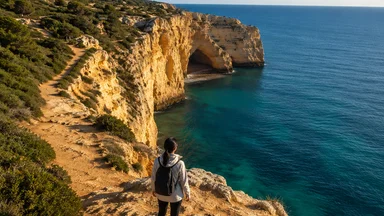
The Algarve's Seven Hanging Valleys trail is one of Portugal's most photographed walks. The brochure shots show golden cliffs plunging into turquoise water under a flawless blue sky. But those images are almost always taken in winter. The August version of the same trail, when most tourists visit, involves heat around 30°C, queues at every cave mouth, and a hazy sky that flattens the colors by late morning. The difference is not marginal. It is structural.
The Brochure Promises Eternal Summer, But February Bakes the Cliffs
August crowds clog the Seven Hanging Valleys trail from Praia da Marinha to Benagil Cave. On peak days, hikers walk single file past bottleneck sections near the cave entrance. The path itself is wide enough in most places, but the sheer volume of people slows movement to a shuffle by mid-morning. February, by contrast, sees perhaps 100 to 200 walkers on a weekday. You can stop, frame a shot, and wait for the breeze to still the water without blocking anyone.
February sun sits low in the sky, casting long shadows that carve texture into the limestone. The rock faces catch light at angles that reveal layers of sediment and fossilized shells. In August, the sun is nearly overhead by 10 a.m., flattening the relief and washing out the ochre tones. Photographers who know the coast well, like Rui Oliveira, avoid summer entirely for landscape work. He calls winter light "the only honest light" for the Algarve's cliffs.
Cloud cover in August often blocks the golden hour. Satellite data show that the Algarve averages roughly 30 to 40 percent cloud cover in August, mostly from morning fog that burns off slowly or from afternoon cumulus that builds over the hills. February's clear-sky probability is higher, around 60 to 70 percent, and the clouds that do form tend to be high and thin, softening rather than blocking the sun.
Winter air clears haze. After a rain shower, visibility can stretch 40 kilometers or more, sharpening the edge of Cape St. Vincent on the horizon. Summer haze, caused by humidity and dust, reduces contrast and mutes the blues. The difference is noticeable even in smartphone photos: winter shots have deeper saturation, summer shots look washed out.
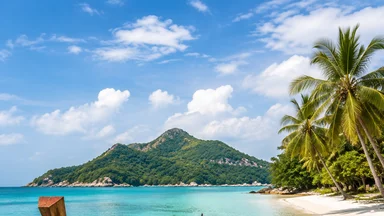
Peak season photos mislead about actual light quality. The images used by travel agencies and tourism boards are almost always captured in late autumn or early spring. A savvy traveler can spot the clues: long shadows, low sun angle, and the absence of heat shimmer over the water. The brochure promise of eternal summer is a lie, but a useful one for anyone willing to read the light.
Why August Tourists Miss the Real Algarve Coastline
Trail temperatures in August hit around 30°C by midday. There is almost no shade on the clifftop path. The heat radiates off the limestone, and the sea breeze often dies inland. Hikers carrying only a small water bottle find themselves dehydrated before reaching Benagil. February highs hover near 15 to 18°C — cool enough for a light jacket at the start, warm enough to walk in a long-sleeved shirt by noon. The body works better at that temperature, and the mind follows.
August queues at Benagil Cave stretch 45 to 60 minutes during the midday window when the sun lights the interior. The cave is small, and the local boat operators limit how many people can enter at once. February allows near-empty cave visits at low tide. You can wade in from the beach side — if the tide is right — and have the entire dome to yourself for a few minutes. The experience of standing under that skylight without the push of a crowd is worth the colder water on your ankles.
Photographer Rui Oliveira, who has shot the Algarve coast for over a decade, says the winter light is more honest because it reveals the geology rather than hiding it. In summer, the glare off the sea and the white limestone creates a high-contrast scene that cameras struggle to expose correctly. Winter's softer light holds detail in both the shadows and the highlights. His portfolio for the region is almost entirely shot between November and March.
The lack of crowds in February also changes the way you hear the coast. The sound of waves echoing in the caves is not masked by chatter. The wind through the sea pines carries farther. The trail feels like a landscape instead of a queue. For a visitor who came to experience the Algarve, not just to tick off a viewpoint, that acoustic shift matters.
Shoulder Season Math: Fewer Crowds, Better Light, Lower Cost
Late February flights from London to Faro cost roughly 40 to 60 percent less than August fares, based on published pricing trends for 2024. The gap widens if you book three to four weeks ahead. Accommodation in Lagos, the nearest base town, drops from peak-season rates of around €120 a night to off-peak rates near €60. A solo hiker can find a private room in a guesthouse for about €40 to €50 in February. In August, that same room goes for double, if it is available at all.
Trail maintenance crews work in winter, so the paths are cleaner and the steps are repaired. The wooden boardwalks along the steep sections are replaced or reinforced before the spring rush. In August, the wear shows: loose gravel, eroded edges, and broken handrails that the municipality cannot fix until the crowds thin. The February walker benefits from infrastructure at its best.
Restaurants in Ferragudo stay open but locals outnumber tourists. The menu prices do not carry a summer markup. A grilled fish lunch with a glass of vinho verde runs about €12 to €15 in February, compared to €18 to €22 in August. The waiters have time to explain the catch. The kitchen is not overwhelmed. The experience is more relaxed and more genuine.
No need to book cliffside viewpoints 48 hours ahead. Some Instagram-famous spots, like the bench at the end of the trail near Benagil, are free and empty in February. In August, you might queue for 20 minutes just to sit on that bench for a photo. The February visitor can linger, take multiple angles, and walk away without having held up anyone else.
What the Guidebooks Get Wrong About Algarve Weather
Most guidebooks claim May through September as the best time for the Algarve, citing sunbathing weather and warm sea temperatures. That advice is correct for a beach holiday. But hiking is not sunbathing. The ideal conditions for a 6-kilometer coastal walk are moderate temperatures, low humidity, and clear visibility. February delivers those better than August.
February averages 7 to 8 sunshine hours per day, which is similar to September. The daylight is shorter — sunset around 6 p.m. instead of 8 p.m. — but the quality of the light is superior for most of the day. The low angle means the cliffs are lit from the side, not from above. The shadows define the contours. The sea reflects a deeper blue when the sun is not directly overhead.
Rainfall in February is roughly 50 to 70 millimeters, concentrated in a few days. A typical February week might include one or two rainy days, often brief. The rest of the week is dry and bright. The rain clears the dust from the air, and the next morning the visibility is exceptional. The risk of a completely washed-out trip is low, and the reward on clear days is high.
Wind speeds drop in winter, making the cliffs safer. Summer afternoons often bring a strong nortada wind that can gust over 30 km/h along the exposed sections. In February, the prevailing winds are lighter, averaging around 15 to 20 km/h. The walk feels less like a battle against the elements. The cliffs are still high and the drops are long, but the wind is less likely to knock you off balance.
The February Trail: A Practical Walk from Marinha to Benagil
Start at Praia da Marinha parking lot around 9 a.m. The lot is free in February and never full. The trailhead is marked, and the first section runs along the edge of a golf course before dropping to the cliffs. The path is well-defined but uneven in places — sturdy shoes help. The walk east toward Benagil is roughly 3 to 4 kilometers, depending on how many detours you take to the viewpoints.
February low tide around midday opens the beach entrance to Benagil Cave. Check a tide table before you go; the window is roughly two hours on either side of low tide. The cave floor is sand and pebbles, and the water can be cold, but the reward is a cathedral of light. The skylight at the top of the dome sends a single beam into the chamber. In February, the beam is angled and shifts across the sand as the sun moves.
Bring a windbreaker. The sea breezes cool the shaded sections, especially where the path dips into the coves. The temperature difference between sun and shade can be 5°C or more. A light fleece under the windbreaker is enough for most days. The sun feels warm on the skin, but the wind cuts through a single layer.
Pack snacks. Winter kiosks along the trail are often closed. The only reliable food is at the restaurants near Benagil beach, which operate limited hours in February. Carry a sandwich and at least a liter of water. There are no fountains on the trail. The extra weight is worth the independence.
How Local Operators Hedge Their Bets on Winter Tourism
Kayak tours run only on calm days in February. The operators check the wind forecast each morning and cancel if the swell exceeds about half a meter. This means you cannot book a kayak tour weeks in advance and be certain it will run. But the tours that do run are intimate — six to eight people instead of twenty. The guides have time to point out sea caves that the summer groups skip.
Boat trips from Portimão still depart but with fewer departures. The larger catamarans switch to a winter schedule with one or two trips per day instead of four. The smaller fishing boats that offer cave tours operate on demand. The experience is less commercial and more personal. The captains know the tides and the hidden arches.
Local guide Marta Silva, who leads walking tours along the coast, says "February groups are serious hikers, not selfie crowds." Her clients ask about geology, birdlife, and the history of the fishing villages. They walk at a steady pace. They do not block the path for 15 minutes trying to get a perfect shot. She prefers winter guiding because the conversation is better.
Some cliffside restaurants close Monday through Wednesday until March. The ones that stay open — like O Litoral near Benagil — serve lunch only, and the menu is shorter. But the quality does not drop. The fish is still caught that morning. The staff is less rushed. The trade-off for fewer choices is more attention.
Birdwatchers flock to Sagres in winter, not summer. The cliffs around Cape St. Vincent are a migration hotspot. From February to April, thousands of seabirds pass close to shore. Hikers on the Seven Hanging Valleys trail often spot gannets and shearwaters from the clifftop. The summer visitor sees mostly gulls. The winter visitor gets a free bird show.
Three Numbers That Settle the Timing Debate
August daily footfall on the trail: estimated 2,000 to 3,000. February weekday footfall: roughly 100 to 200. The ratio is about 15 to 1. The experience of walking a trail with 15 times more people is not simply busier — it is fundamentally different. You cannot pause to watch a wave break without being part of a crowd. You cannot hear the silence between the waves. The math is not subtle.
Average August cloud cover over the Algarve: around 30 to 40 percent. February clear-sky probability: roughly 60 to 70 percent. The difference in usable light for photography is even larger because August haze reduces contrast even on clear days. The February sky is either clear or covered in high cloud that acts as a diffuser. The result is more consistent, more flattering light.
Cost per day for a solo hiker in February: about €40 to €60, including accommodation, meals, and local transport. August daily costs roughly double. The savings alone could fund a second trip elsewhere. But the real return is not financial — it is the quality of the experience. The Algarve in February is not a compromise. It is the version of the coast that the brochures pretend exists all year.
None of this means August is unvisitable. The sea is warmer, the evenings are longer, and the beach culture is in full swing. For a pure beach holiday, summer makes sense. But for the cliff trail — the walk that draws people to the Algarve in the first place — winter is the season that delivers what the photos promise. The math favors February.