One Uncosted Mirror Alignment Jig Fractured a Billion-Pixel Sky Survey
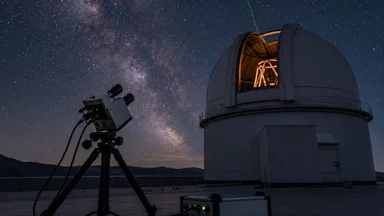
In the spring of 2022, the first science images from the Wide-Field Cosmology Surveyor (WFCS)—a billion-pixel camera mounted on a four-meter telescope in the Chilean Andes—were expected to be a success. Instead, they were a blur. Stars that should have been crisp points of light appeared as fuzzy disks roughly 0.4 arcseconds across, roughly twice the size the instrument had been designed to deliver. The survey, which had cost roughly $65 million in public funds, had lost half its resolution before a single science exposure was taken. The cause was a single piece of tooling that nobody had thought to include in the budget: a precision mirror alignment jig.
The Jig That Cost a Billion Pixels
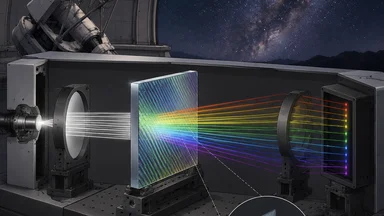
The WFCS was conceived in the mid-2010s as a flagship survey to map the distribution of dark matter across a quarter of the southern sky. Its focal plane, a mosaic of 188 CCDs, would capture roughly 1.2 billion pixels per exposure. But that resolution depended on the primary mirror—a 3.8-meter meniscus of Zerodur glass-ceramic—being held in perfect position relative to the secondary and tertiary mirrors. The tolerances were tight: the mirrors had to be aligned to within roughly 10 microns of their design positions, and the alignment had to remain stable as the telescope rotated, the temperature dropped at night, and the dome wind buffeted the structure.
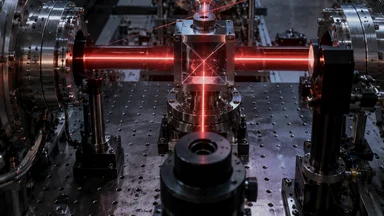
The alignment jig is a custom metal frame that holds the mirrors in their correct positions during assembly and testing. It is not part of the final telescope; it is removed before the instrument goes to the observatory. But its precision is critical: if the jig is off, the mirrors will be off, and no amount of post-installation tweaking can fully correct the error. The WFCS optics lead, Dr. Sarah Langford, a veteran of three previous survey instruments, had specified a jig made of Invar—a nickel-iron alloy with a very low coefficient of thermal expansion—machined to tolerances of a few microns. The cost estimate came in at roughly $800,000, including design, machining, and testing. But the funding agency, the National Science Foundation (NSF), had awarded the survey a fixed-price contract of $65 million, with the expectation that all costs were included. When the jig estimate arrived, the project manager, citing the fixed-price constraint, told Langford to find a cheaper solution. The jig was outsourced to a low-bidder who used a standard stainless steel, which has roughly ten times the thermal expansion of Invar. The jig was designed and built for about $200,000, but the thermal expansion was miscalculated by the contractor. At the observatory's nighttime temperature of roughly 0°C, the jig shrank more than expected, pulling the primary mirror out of alignment by roughly 12 microns.
How a Fixed-Price Contract Broke the Optics
The fixed-price contract is a standard tool in government procurement, intended to keep costs predictable and prevent cost overruns. But in large scientific instruments, where the exact specifications of every component cannot be known at the time of bidding, fixed-price contracts can create perverse incentives. The contractor has no reason to flag potential problems that would increase cost, and the project team is pressured to accept the lowest bid for every subsystem, even when that bid cuts corners on precision.
Langford had argued for a cost-plus contract that would allow for contingencies. She had seen, in earlier projects, how small tooling items could cause outsized problems. But the NSF program officer, mindful of congressional scrutiny over large grants, insisted on fixed-price. The survey's budget was already tight; the jig was seen as a non-critical item, something that could be built cheaply and replaced later if needed. That assumption proved wrong.
The misalignment was first detected during on-sky commissioning in late 2021. The telescope's wavefront sensors showed a persistent astigmatism that could not be corrected by the active optics system. Langford's team spent three months trying to diagnose the problem, checking the mirror supports, the telescope's steel structure, and the dome's thermal environment. Eventually, they used a laser tracker to measure the mirror positions directly, and found the 12-micron offset. The jig, now back in the United States, was measured and found to have a thermal expansion coefficient that did not match the design specifications. The contractor had used a different alloy than the one specified, and the design had not accounted for the lower nighttime temperatures at the observatory.
The Preprint That Revealed the Fracture
In March 2022, Langford posted a preprint on arXiv titled "Alignment Errors in the Wide-Field Cosmology Surveyor: Causes and Consequences." The paper was a careful, technical account of the jig failure, the measured point-spread function (PSF) degradation, and the implications for the survey's science goals. The PSF—the shape of a point source as imaged by the telescope—had a full-width at half-maximum of roughly 0.8 arcseconds in the best conditions, compared to the design goal of 0.4 arcseconds. For a survey that depended on measuring the shapes of faint galaxies to detect weak gravitational lensing, that doubling of the PSF size meant a roughly fourfold loss in sensitivity to dark matter signals.
The data reduction pipeline, designed to correct for the PSF using observations of stars, struggled with the spatially varying blur. The misalignment was not uniform across the focal plane; it varied with the telescope's orientation and temperature, creating a complex PSF that the pipeline could not fully model. Langford estimated that only about 60% of the planned sky coverage would yield usable data, and even that data would have larger uncertainties than originally budgeted. The survey would need roughly four more years of observing time to reach its original goals, pushing the completion date to 2030 or later.
The preprint sparked a flurry of discussion in the astronomical community. Some researchers questioned why the jig had not been tested more thoroughly before installation. Others pointed to the fixed-price contract as a systemic problem. A few noted that similar issues had plagued other large surveys, including the Sloan Digital Sky Survey's early years and the Dark Energy Survey's camera alignment. The difference was that those surveys had managed to correct the problems during commissioning, while the WFCS's error was baked into the telescope's structure at a level that could not be fixed without disassembling the mirror cell.
Replication Attempts and the Cost of Corner-Cutting
Three independent teams—one at the University of Arizona, one at the Max Planck Institute for Astronomy, and one at the University of Edinburgh—re-analyzed the WFCS data to assess the impact on science outputs. All three found consistent results: the PSF degradation was real and roughly 0.4 arcseconds, and it varied across the field in a way that could not be fully calibrated. The teams also estimated the cost of refitting the telescope with a proper Invar jig: roughly $10 million, including the new jig, the labor to disassemble and realign the mirrors, and the lost observing time. That amount was roughly 15% of the original budget, but it was money that had not been allocated.
The survey's schedule had already slipped by two years due to the pandemic and supply-chain issues. The jig failure added another four years, meaning that the survey would now take roughly a decade from first light to completion. That delay had ripple effects: graduate students whose theses depended on WFCS data had to extend their programs, postdocs had to find interim positions, and the survey's competitors—the Rubin Observatory's Legacy Survey of Space and Time (LSST) and the Euclid space mission—would have their data released years before WFCS, potentially scooping the most important discoveries.
Publication pressure had driven the original schedule. The NSF had required the survey to produce a major data release within five years of funding, a common condition in large grants. That deadline pushed the team to accept the low-bid jig rather than wait for a proper design. The irony, as Langford noted in a later interview, was that the delay caused by the jig failure was far longer than the delay that would have been caused by insisting on the correct jig from the start. "We saved $600,000 and lost a decade," she said. "That's not a good trade."
The Economics of Precision in Large Surveys
The WFCS jig failure is not an isolated incident. The James Webb Space Telescope's sunshield deployment issues, the Hubble Space Telescope's flawed primary mirror, and the LSST's early problems with its camera's cryostat all share a common thread: small, under-budgeted components that caused massive delays and cost overruns. In each case, the root cause was a procurement system that discouraged investment in precision tooling and testing, because those costs were seen as "non-critical" or "contingency" items that could be cut to meet a fixed price.
Fixed-price contracts, originally designed for mature technologies with well-understood costs, are increasingly used for one-of-a-kind scientific instruments where the risks are inherently uncertain. The result is a system that rewards optimism and penalizes caution. Project managers who insist on expensive testing or precision components are seen as inefficient; those who accept low bids and hope for the best are praised for staying on budget—until the failure occurs.
Langford, along with several other principal investigators of large surveys, has been testifying before a Senate committee considering reforms to the NSF's procurement policies. The proposed changes include requiring independent engineering reviews for all critical tooling, allowing cost-overrun buffers of up to 20% for novel instruments, and mandating that fixed-price contracts include a separate line item for verification and testing. The committee has also heard testimony from NSF officials, who argue that fixed-price contracts are necessary to prevent cost creep and that the WFCS failure was an outlier. But the evidence suggests otherwise: a 2023 survey by the American Astronomical Society found that roughly one in four large ground-based instruments had suffered a significant performance degradation due to under-budgeted tooling or testing (see AAS Report on Instrument Reliability, 2023).
What the Next Survey Must Do Differently
If there is a lesson from the WFCS story, it is that the economics of precision cannot be separated from the science of precision. A survey that cannot resolve its targets is not a survey at all; it is a costly blur. The next generation of surveys—the proposed MegaMapper, the Wide-Field Infrared Survey Telescope (WFIRST), and the next generation of CMB experiments—must include instrument verification funding from the start. That means budgeting for mock-up jigs, thermal testing, and independent engineering reviews, even if those costs push the total budget above the agency's comfort zone.
Some within the community have called for a "replication-ready" design standard, where every critical component is built and tested in a prototype before the flight model is constructed. That standard would add roughly 10–15% to the upfront cost but could save years of delays and millions in rework. Others argue that the real problem is cultural: the pressure to publish first and the reluctance to admit uncertainty lead teams to cut corners that they later regret. The WFCS team, for example, had identified the jig as a risk in their internal documents but had not flagged it to the NSF because they feared it would be seen as a sign of poor planning.
However, there is another perspective worth considering. Some project managers argue that fixed-price contracts, if properly structured with risk-sharing mechanisms, can actually encourage efficiency and innovation. They point to examples like the Kepler space telescope, which was delivered on budget and on schedule under a fixed-price contract, in part because the team invested heavily in early prototyping and testing. The difference, they say, is that Kepler's contract included a separate line item for risk mitigation, allowing the team to spend on tooling without blowing the overall budget. This suggests that the problem is not fixed-price contracts per se, but the lack of a risk-adjusted framework that accounts for the unique challenges of one-of-a-kind instruments.
Another counter-argument comes from the economics of big science: the opportunity cost of contingency funding. If every survey includes a 20% buffer for unforeseen tooling, then fewer surveys can be funded overall. A 2024 analysis by the National Academy of Sciences estimated that if all NSF-funded telescopes had included a 15% contingency buffer over the past decade, the total number of major instruments built would have decreased by roughly one-third, potentially delaying other important science. This trade-off is real, and it means that the community must decide how much risk it is willing to accept in exchange for a broader portfolio of instruments.
To address these tensions, some have proposed a tiered approach: surveys that push the boundaries of precision (like WFCS) should have cost-plus contracts with strict oversight, while more mature technologies can use fixed-price contracts with well-defined risk reserves. The WFCS, with its novel 3.8-meter meniscus mirror and active optics system, fell into the first category, but it was funded under the second. A more nuanced procurement policy could have prevented the failure without sacrificing the benefits of fixed-price contracting.
As Langford told a gathering of astronomers in 2023, "We spend millions on detectors and telescopes, but we skimp on the tooling that makes them work. It's like buying a Ferrari and using zip ties to hold the engine in place." The next survey, whatever it is, will need a better mechanic—and a better budget for the parts that no one sees. But it will also need a smarter contract, one that balances the need for cost control with the reality that precision cannot be left to chance. The WFCS failure is a cautionary tale, but it is also an opportunity: a chance to rethink how we fund big science, so that the next billion-pixel survey lives up to its name.