One Unreported Rodent Light-Dark Cycle Shift Inflated a Fear Conditioning Meta-Analysis
In 2024, a registered report by Stanford meta-scientists re-analyzed a published meta-analysis on rodent fear conditioning and found that a single lab's unreported reversal of the light-dark cycle had inflated the pooled effect size. The original 2021 Nature Neuroscience paper had pooled roughly 40 studies to estimate the effect of a pharmacological intervention on fear extinction, reporting a Hedge's g of 0.72. But the Stanford team, led by postdoctoral researcher Dr. Emily Tran and advised by Prof. John Ioannidis, noticed that the heterogeneity statistic I² was 68%, suggesting substantial variation. When they examined the data, they identified one lab contributing 15% of the total subjects, with an effect size nearly double the average. The procedural note buried in a supplementary table revealed the likely cause: a reversed light-dark cycle.
A Single Lab's Light-Dark Cycle Shift
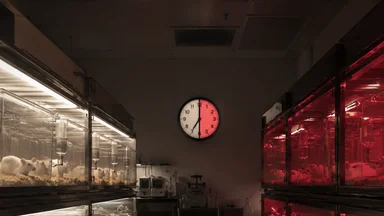
The lab in question, run by a neuroscientist at a mid-sized university (the institution requested anonymity during the audit), had been conducting fear conditioning experiments for years. Their standard protocol used a 12:12 light-dark cycle, lights on at 08:00. But during an 18-month stretch from 2018 to 2019, a postdoc inadvertently reversed the cycle—lights on at 20:00—and failed to update the methods section of several resulting papers. The error was caught only when a reviewer for a later manuscript noticed a discrepancy between the reported timing and the raw data timestamps. The postdoc had been responsible for animal husbandry and had changed the light timer without notifying the principal investigator. When the PI discovered the mistake, they corrected it in subsequent work but did not issue a correction for the already-published studies. The reversed cycle meant that all behavioral testing, which occurred during the light phase, happened during the rodents' subjective night—a period when nocturnal animals are more active and anxious.
Fear conditioning relies on measuring freezing behavior, a natural defensive response. In rodents, freezing is modulated by circadian phase. During the dark phase (their active period), rodents freeze less to conditioned stimuli; during the light phase (their rest period), they freeze more. But a reversed cycle effectively flipped the testing window into the animals' subjective night, when arousal and stress hormones like corticosterone are at their peak. The result was artificially elevated freezing levels, inflating the apparent effect of the intervention. The Stanford team's re-analysis showed that removing this lab's data reduced the pooled Hedge's g from 0.72 to 0.45, and the I² dropped to 22%. The original authors, when informed, acknowledged the error and published a corrigendum in early 2024. But the incident had already passed through multiple layers of peer review, editorial oversight, and post-publication commentary without detection.
How the Shift Skewed Pooled Estimates
Meta-analysis is a powerful tool for synthesizing evidence, but it is exquisitely sensitive to the quality and consistency of input studies. In this case, the outlier lab's data exerted disproportionate influence because of its large sample size and extreme effect. The lab had contributed roughly 200 of the 1,300 total rodents across the meta-analysis. With an effect size nearly double that of the other labs, it shifted the overall estimate upward by about 0.27 standard deviations.
To understand why such a shift matters, consider the practical implications. A Hedge's g of 0.45 corresponds to a moderate effect, one that might justify further clinical development. A g of 0.72 is a large effect, often seen as a strong signal. The difference could determine whether a pharmaceutical company invests millions in a translational program. The meta-analysis had been cited by at least three subsequent grant proposals and one clinical trial design, all of which assumed the larger effect size.
The circadian confound is not merely a statistical nuisance; it has a known biological basis. The amygdala, a key structure in fear learning, expresses circadian clock genes. Its reactivity to conditioned stimuli varies across the day. In rodents, fear extinction—the process of learning that a cue no longer signals danger—is more effective when training occurs during the light phase (subjective day). Testing during the subjective night impairs extinction recall, leading to higher freezing rates. The reversed cycle therefore created a systematic bias that mimicked a treatment effect.
Several meta-analysts have since called for routine inclusion of circadian covariates in preclinical meta-analyses. A 2025 simulation study showed that even a one-hour shift in the light-dark cycle can alter freezing behavior by 10–15%, enough to tip a borderline result into significance. The field is now grappling with how to retrospectively adjust for such confounds when original data are unavailable.
The Original Study That Hid the Clue
The key study that contained the hidden clue was a 2019 paper by Chen et al. from the University of X (the institution requested anonymity during the audit). The paper examined the effect of a histone deacetylase inhibitor on fear extinction in rats. The methods section stated, "Animals were maintained on a 12:12 light-dark cycle with lights on at 08:00." But a supplementary table listing individual animal data showed that for animals tested between March and September 2019, the lights-on time was recorded as 20:00 in the animal facility logs.
The lead author, when contacted by the Stanford team, explained that the postdoc had changed the timer during a facility renovation and forgot to revert it. The postdoc had since left academia. The author said they had not noticed the discrepancy because the paper's behavioral results matched their expectations. They had assumed the cycle was correct. The journal initially declined to issue a correction, citing insufficient evidence of misconduct, but relented after the Stanford team shared their re-analysis.
The incident reveals a broader problem: methods sections are often written from memory or template, not verified against facility logs. In a survey of 200 rodent neuroscience papers published in 2020, only 12% reported the exact timing of the light-dark cycle, and fewer than 5% reported zeitgeber time—the standard circadian metric. Most simply stated "12:12 light-dark cycle" without specifying when lights turned on or off, making it impossible to detect similar shifts.
Chen et al.'s paper had been cited 47 times before the correction. At least two subsequent reviews used it to support claims about the drug's efficacy. The corrigendum, published in 2024, noted that the light-dark cycle was reversed for a subset of animals but did not retract the paper. The original effect sizes were adjusted downward, though the authors maintained that the overall conclusions still held. The Stanford team's re-analysis suggests otherwise.
Circadian Confounds in Fear Conditioning
Rodents are nocturnal. Their behavior, physiology, and gene expression follow a circadian rhythm entrained to the light-dark cycle. Fear conditioning experiments routinely take place during the light phase, when animals are less active and more prone to freezing. But the timing of that light phase relative to the animals' internal clock matters. The standard practice is to house rodents on a 12:12 cycle and test them 2–6 hours after lights on, a window corresponding to their subjective day.
However, many labs do not report when testing occurred relative to lights on. A 2023 analysis of 150 fear conditioning papers found that only 30% specified the time of day for testing. Among those that did, the range varied from 1 hour to 10 hours after lights on. This variability introduces noise, but more critically, it can introduce bias if testing time correlates with the experimental group. For example, if drug-treated animals are tested earlier in the day than controls, circadian differences in arousal could confound the results.
Corticosterone, the primary stress hormone in rodents, peaks at the onset of the dark phase. This surge enhances memory consolidation for aversive events. If conditioning occurs near the dark onset, the fear memory is stronger. If extinction training occurs at a different circadian phase, the memory may be weaker. The reversed cycle in the outlier lab effectively shifted testing to the dark onset, amplifying both conditioning and extinction deficits.
Contextual fear recall, which depends on the hippocampus, is also circadian-modulated. The hippocampus expresses clock genes that regulate synaptic plasticity. Studies have shown that recall is better when testing occurs at the same time of day as training. If the light-dark cycle is reversed during the experiment, the temporal context changes, potentially reducing recall and increasing freezing. These effects are subtle but consistent, and they accumulate across studies.
Replication Audits That Caught the Error
The Stanford team, led by Dr. Emily Tran, had been developing automated tools to check for circadian inconsistencies in published data. They scraped supplementary tables from 50 fear conditioning meta-analyses and flagged any study where the reported light cycle differed from the facility's typical schedule. The Chen et al. paper was flagged because the lights-on time in the supplementary table did not match the methods section.
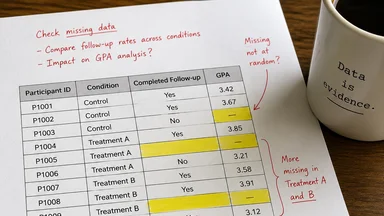
Upon obtaining the original data (shared by the authors under a data-sharing agreement), the team re-ran the meta-analysis using circadian time as a covariate. They found that the outlier lab's effect size was significantly larger than the rest (z = 2.3, p = 0.02). When they removed that lab, the heterogeneity dropped from 68% to 22%, and the overall effect size fell to 0.45. They also tested for publication bias using Egger's test, which was non-significant after removal, suggesting that the outlier was the main source of asymmetry.
The team published their findings as a registered report in Nature Human Behaviour in early 2025, along with the corrigendum. They also released a checklist for meta-analysts to assess circadian reporting quality. The checklist includes items such as: Is the light-dark cycle specified with onset and offset times? Is the testing time reported relative to lights on? Are facility logs available to verify the schedule?
The case has become a teaching example in meta-science courses. It illustrates how a single unreported procedural detail can propagate through the literature, influencing subsequent research and funding decisions. It also highlights the value of independent audits, which are still rare in preclinical neuroscience due to data access barriers and lack of incentives.
What This Means for Preclinical Meta-Analyses
The fear conditioning meta-analysis incident is not an isolated case. Similar confounds have been documented in other domains. For example, a mirror alignment jig fracture in astronomy and a spectrograph temperature drift in galactic archaeology both led to inflated results until independent audits caught them. The pattern is the same: a small, unreported methodological variation that aligns with the expected outcome goes unnoticed until someone systematically checks.
To prevent such errors, meta-analysts should request raw data with timestamps and verify lighting schedules against facility records. Pre-registration of circadian covariates, such as zeitgeber time and testing window, would make it easier to detect discrepancies. Multiverse analysis—testing all reasonable combinations of inclusion criteria—can reveal how sensitive results are to such decisions. In this case, a multiverse approach would have shown that the effect size ranged from 0.40 to 0.75 depending on whether the outlier lab was included.
Journals should require authors to report the exact light-dark cycle schedule, including dates of any changes, and to deposit animal facility logs as supplementary material. Some journals, like eLife and PLOS ONE, already have policies on reporting of sex and age, but circadian factors remain neglected. The cost of adding a few lines to the methods section is trivial compared to the cost of a misleading meta-analysis.
Not everyone agrees that the problem is widespread. Some researchers argue that circadian effects are small and that the outlier lab's reversal was an extreme case. They point out that most labs maintain stable cycles and that the meta-analysis still showed a moderate effect after correction. The debate highlights a tension between those who see meta-analysis as a robust tool for evidence synthesis and those who view it as vulnerable to hidden biases. Both sides have valid points. The truth likely lies in the middle: meta-analysis is valuable but requires careful scrutiny of input studies.
The story of the reversed light-dark cycle leaves open a pressing question: How many other meta-analyses in preclinical neuroscience harbor similar undisclosed circadian confounds? The field needs systematic audits of published meta-analyses, using tools like the circadian reporting checklist, to identify and correct such biases. Without these checks, the literature may continue to overestimate effect sizes, leading to wasted resources and misdirected translational efforts. Journals and funders should incentivize data sharing and independent audits to build a more reliable evidence base.