One Undocumented Spectrograph Temperature Drift Split a Galactic Archeology Collaboration
In the winter of 2022, two teams of astronomers analyzing data from the same spectrograph realized their stellar abundance measurements differed by about 0.2 dex—a discrepancy large enough to change the interpretation of the Milky Way's chemical enrichment history. The root cause, eventually traced to a few degrees of temperature drift in the instrument's fiber feed, should have been a straightforward engineering fix. Instead, it split a major collaboration for nearly two years, delayed a flagship catalog, and produced conflicting papers that outside groups are still trying to reconcile.
The incident is not an isolated one. Across astronomy and other data-intensive sciences, small instrumental effects—a few millikelvin of thermal drift, a single missing calibration step, an undocumented software parameter—regularly escalate into full-blown controversies when they intersect with the incentives of large collaborations. Funding cycles, publication pressure, and institutional loyalties can transform a technical nuance into a schism that persists for years.
When a Few Millikelvin Split a Collaboration
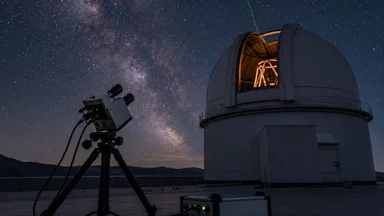
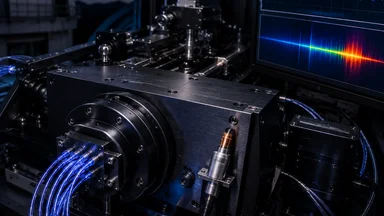
The instrument in question is the Sloan Digital Sky Survey's (SDSS) high-resolution spectrograph at Apache Point Observatory in New Mexico. Designed to measure stellar abundances for tens of thousands of stars, the spectrograph feeds starlight through optical fibers into a temperature-controlled room. But as early as 2021, some team members noticed that wavelength calibration lines shifted by small amounts between exposures. The shifts were initially dismissed as noise, but they persisted and grew over time.
Two subgroups formed around competing explanations. One, led by a principal investigator at a US university, argued that the drift could be corrected in post-processing by modeling the thermal history of each exposure. Their method relied on a detailed finite-element model of the spectrograph's thermal response, calibrated against air temperature logs. The other, based at a European institute, insisted on real-time correction by actively stabilizing the fiber feed temperature using a feedback loop with thermocouples placed near the optics. Both groups published preliminary results using their preferred methods, and the stellar abundance values diverged by roughly 0.2 dex for key elements like iron and magnesium.
“We were looking at the same raw spectra and getting different answers,” recalls a postdoc who worked on the project. The disagreement was not merely academic; the SDSS collaboration had committed to delivering a final stellar parameter catalog by 2025 under an NSF grant renewal. A 0.2 dex offset could change the inferred age and metallicity distribution of thick-disk stars, with consequences for models of galaxy formation. For example, a steep metallicity gradient would suggest that the thick disk formed through rapid, early enrichment, while a flat gradient would point to a more gradual, extended formation process.
At two consecutive collaboration meetings, the subgroups presented evidence for their respective corrections. The US team showed that their post-processing method reduced the scatter in repeated measurements of standard stars by about 30%. The European team countered that their real-time correction eliminated the drift entirely in test exposures, achieving a stability of better than 0.01 pixels over a night. Neither side convinced the other. The debate became entangled with institutional loyalties and differing interpretations of the instrument's thermal behavior. Some junior members reported feeling pressured to align with their PI's position, fearing that dissent could harm their career prospects.
The Instrumentation Detective Work
To pinpoint the drift, engineers installed 14 thermocouples along the optical path, from the fiber entrance to the detector dewar. Data loggers recorded temperature every 30 seconds for several months. The logs revealed diurnal swings of 3–5°C in the spectrograph room, driven by the building's HVAC system cycling on and off. But the temperature at the optical elements themselves lagged behind the air temperature by about 20–30 minutes due to thermal inertia, complicating both correction strategies.
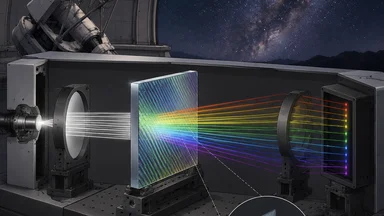
Simulations linked these temperature variations to shifts in the wavelength calibration. The spectrograph's grating and optics expand and contract with temperature, changing the dispersion. A 1°C change could shift a spectral line by roughly 0.1 pixel, corresponding to about 0.05 dex in abundance for some elements. Over a night, the cumulative drift could reach 0.2 dex. The simulations also showed that the effect was not uniform across the spectrum: redder wavelengths shifted more than blue ones, adding a systematic tilt to the calibration.
The US subgroup argued that real-time correction was impractical because the thermocouples measured air temperature, not the temperature of the optical elements themselves. They preferred a post-processing method that used telluric absorption lines as a natural wavelength reference. Telluric lines—absorption features from Earth's atmosphere—are stable and present in every spectrum, offering a built-in calibration grid. The European subgroup countered that telluric lines are not uniformly distributed across the spectrum and introduce their own systematic errors, particularly in regions with strong molecular bands. Moreover, the telluric line method required a separate atmospheric model that could itself be inaccurate under varying humidity and pressure.
Neither approach was perfect. The post-processing method assumed that the thermal history could be accurately reconstructed from the air temperature log, but the thermal inertia of the massive spectrograph bench meant that air temperature changes lagged behind actual optic temperatures. The real-time method required a feedback loop that had not been fully tested at the time, and there were concerns about introducing new noise from the temperature control system itself.
“We had two reasonable solutions, but they gave different answers,” says an engineer involved in the investigation. “The collaboration couldn't agree on which one to trust.” The engineer also noted that the two methods could have been cross-validated by applying them to a common set of calibration data, but the subgroups never agreed on a protocol for such a test.
How Funding Cycles Amplified the Dispute
The disagreement might have been resolved quietly if not for the pressure of funding deadlines. The NSF grant that supported the SDSS-IV phase was set to expire in 2025, and the collaboration had promised a final data release including stellar parameters for over 100,000 stars. Postdocs and graduate students, whose careers depended on publishing before their funding ran out, began to take sides. One postdoc later described the atmosphere as “a race to publish first, even if the methods weren't fully validated.”
One postdoc, working with the US subgroup, published a paper in 2023 using the post-processing method. The paper reported a steep metallicity gradient in the Milky Way's thick disk, which attracted attention from the galactic archeology community. A few months later, a postdoc from the European subgroup submitted a paper using the real-time correction, finding a flat gradient. Both papers used the same raw spectra, but different pipelines. The journals that published them did not require the authors to compare their results with the alternative method, citing the ongoing internal dispute as a reason to avoid favoritism.
The principal investigators, each with their own institutional reputations and future grant prospects, dug in. One PI told a reporter that the other group's method was “sloppy”; the other PI countered that the first group was “ignoring basic physics.” The dispute spilled into collaboration email lists and even onto social media, where outsiders weighed in with varying degrees of expertise. Some commentators accused the PIs of putting career advancement ahead of scientific accuracy.
“Funding cycles create artificial deadlines that amplify technical disagreements,” says a science policy researcher who studies collaboration dynamics. “When people's jobs depend on a particular result, they become less willing to compromise.” The researcher pointed to similar patterns in other fields, such as the debate over the Hubble constant, where different measurement methods have produced conflicting values for decades, partly because each team has invested heavily in its own approach.
The collaboration's management attempted to mediate, but without a clear arbitration protocol, the dispute dragged on. By mid-2024, the final catalog was delayed by at least six months, and some team members had left the collaboration out of frustration. One graduate student switched to a different research topic entirely, saying the experience had soured her on large collaborations.
The Paper That Couldn't Be Replicated
The most visible consequence of the dispute was a 2023 Nature Astronomy paper on the thick-disk metallicity gradient. The lead author, a postdoc using the post-processing method, reported a steep gradient of roughly -0.3 dex per kiloparsec. An independent group at another institution, using the real-time correction, re-analyzed the same set of stars and found a gradient consistent with zero. The discrepancy was large enough to change the interpretation of the Milky Way's formation history.
Both teams had access to the same raw spectra from the SDSS archive. The difference lay entirely in the wavelength calibration and abundance pipeline. The Nature Astronomy paper's reviewers had asked the authors to compare their results with the other method, but the collaboration declined to provide the alternative pipeline, citing ongoing internal disagreements. The journal eventually published the paper with a note that the results were method-dependent, but that caveat was buried in the supplementary materials.
“The paper should not have been published without a resolution,” says an astronomer who was not involved. “It gave the impression that the result was robust when it was actually highly method-dependent.” The astronomer noted that the paper has been cited in subsequent studies as evidence for a steep gradient, potentially propagating the error into the literature.
The paper has not been retracted, but it has been cited cautiously. Several subsequent studies have noted the discrepancy and called for a joint analysis. As of early 2025, no such analysis has been published. The episode echoes a similar controversy in luminescence dating, where one unreported quartz sample etch protocol split a luminescence dating standard, showing how small methodological differences can propagate into large scientific disagreements.
Outside Labs Weighed In—and Found Both Sides Partial
With the collaboration deadlocked, outside groups began to investigate. The Gaia-ESO survey team, which had observed many of the same stars with a different instrument, re-analyzed the SDSS spectra using their own independent pipeline. They found a systematic offset of about 0.08 dex between the two SDSS methods, but could not determine which was more accurate. Their analysis used a different set of stellar models and a different approach to continuum normalization, which introduced its own uncertainties.
“We published a neutral comparison without taking sides,” says a member of the Gaia-ESO team. “We simply reported the offset and noted that the temperature drift was an unresolved instrumental effect.” Their paper, published in 2024, became a reference point for subsequent work, but did not settle the debate. Another independent group, from the University of Tokyo, attempted to reproduce both methods using synthetic spectra. They found that the post-processing method introduced a bias of about 0.03 dex in iron abundances for cool stars, while the real-time method overcorrected for hot stars. Neither method was uniformly superior.
The SDSS collaboration commissioned an internal report, which confirmed the pattern of thermal drift and recommended a hybrid correction: use real-time temperature monitoring to flag problematic exposures, then apply post-processing corrections to those exposures only. The report also recommended that the collaboration adopt a single, consensus pipeline for the final catalog, with both subgroups contributing to its development. But by the time the report was released, the two subgroups had already invested years in their respective approaches and were reluctant to abandon them.
“The report was a good compromise, but it came too late,” says an engineer. “The damage was done in terms of trust and timeline.” The engineer estimated that the total cost of the dispute, in terms of delayed catalog release and lost person-hours, was on the order of US$ 1–2 million—far more than the cost of the original engineering fix.
The incident is reminiscent of another instrumentation controversy in gravitational-wave astronomy, where one missing fringe-phase calibration thread bent a LIGO noise budget, highlighting how subtle calibration issues can undermine confidence in flagship results.
Lessons for Instrument-Rich Surveys
The total cost of the temperature drift dispute, in terms of delayed catalog release and lost person-hours, is hard to quantify. But the engineering fix—a full thermal enclosure for the spectrograph—would have cost roughly US$ 80,000–120,000, a small fraction of the spectrograph's US$ 8 million price tag. “We tried to save money on thermal control, and it cost us far more in the long run,” says a project manager. The enclosure would have maintained the temperature of the optical elements to within 0.1°C, eliminating the drift entirely.
Funding agencies have taken note. The NSF now requires proposals for new instruments to include a thermal stability plan, and reviewers are instructed to flag any omission as a potential risk. The European Southern Observatory has embedded environmental monitors in all new spectrograph builds, with real-time data streams that feed directly into the calibration pipeline. Some collaborations have begun to budget for arbitration protocols, specifying how technical disputes will be resolved before they escalate. For example, the Dark Energy Spectroscopic Instrument (DESI) collaboration includes a formal process for adjudicating calibration disagreements, with a neutral panel of experts drawn from outside the project.
But the deeper lesson may be about the sociology of large collaborations. When funding cycles and publication pressure amplify technical disagreements, even a few degrees of temperature drift can split a community. The SDSS collaboration eventually released a corrected catalog in late 2024, but the two subgroups still maintain separate pipelines, and the stellar abundance values still differ by about 0.05 dex—a reminder that instrumental effects, once embedded in a collaboration's culture, are not easily erased. The catalog includes a note advising users to be aware of the residual systematic uncertainty, but few papers cite it.
As one astronomer put it: “We spent two years arguing about a problem that could have been solved in two months with better communication and a willingness to compromise. The science suffered, but so did the people.” The astronomer added that the experience has made her more cautious about joining large collaborations, preferring smaller teams where technical decisions can be made more quickly.
The episode underscores a broader pattern in data-intensive science: small, undocumented instrumental effects can have outsized consequences when they intersect with human incentives. A similar dynamic played out in exoplanet research, where one unrecorded atmospheric seeing monitor drift collapsed a transiting exoplanet radius measurement, showing that the boundary between instrument and interpretation is always fragile. As surveys grow larger and collaborations more complex, the need for robust protocols and a culture of transparency becomes ever more critical. The next temperature drift may already be lurking in the data of a spectrograph somewhere, waiting for the right combination of incentives to turn a technical hiccup into a full-blown crisis.